How to maintain portable crusher plant in winter?
Understanding How to maintain portable crusher plant in winter? is critical for surviving sub-zero mining environments. Freezing temperatures drastically alter the physics of heavy machinery, causing lubricating oils to sludge and high-manganese steel to become brittle. Executing a loaded startup in these conditions guarantees catastrophic bearing seizure and structural fracture. By enforcing strict thermal pre-heating protocols, upgrading to winter-grade synthetic lubricants, and managing ice accumulation on conveyors, site operators can secure continuous production, protect their hardware amortization cycle, and eliminate weather-induced downtime.
Sub-zero environments do not tolerate operational negligence. During an inspection of a mobile crushing circuit in Northern Canada this January 2026, a 250 kW cone crusher had suffered a catastrophic main shaft seizure before processing a single ton of rock. The operator had initiated a standard startup protocol at -25°C. The lubricating oil had congealed into a thick sludge, preventing it from reaching the upper thrust bearing. The resulting metal-on-metal friction destroyed the eccentric copper bushing in under 15 minutes. Mastering How to maintain portable crusher plant in winter? requires a fundamental shift in operational logic. Freezing temperatures alter fluid dynamics and the metallurgical resilience of steel. Protecting your expenditure per shift in these conditions demands rigorous thermal management, specific lubricant upgrades, and absolute adherence to cold-weather startup sequences.
Thermal Viscosity and Lubrication Protocols
Viscosity breakdown is the leading cause of winter mechanical failure. Oil that cannot flow cannot lubricate.
The thin-oil lubrication station is the lifeblood of any heavy-duty cone or jaw crusher. At standard operating temperatures, an ISO VG 220 oil flows freely. At -20°C, this same oil turns into an un-pumpable sludge. If the oil cannot complete its gravity return to the reservoir, the internal pump will cavitate, and the main bearings will suffer instant oil starvation. The first mandate for winterization is draining the summer fluids and replacing them with a low-viscosity, winter-grade synthetic oil specifically formulated for extreme cold.
Modern portable plants feature integrated oil heaters. Operators must activate these heaters and allow the oil pump to circulate the fluid through the machine for at least 30 minutes before engaging the main drive motor. The PLC system should be configured to lock out the main crusher ignition until the internal oil temperature registers a safe baseline (typically >15°C).
Mitigating Metallurgical “Cold Brittleness”
Steel exhibits severe “cold brittleness” in sub-zero climates. The high-manganese steel used in jaw dies and cone mantles is designed to work-harden under impact, but extreme cold makes these alloys highly susceptible to shattering. Striking a frozen 200 MPa boulder into an un-warmed crushing chamber is a massive risk.
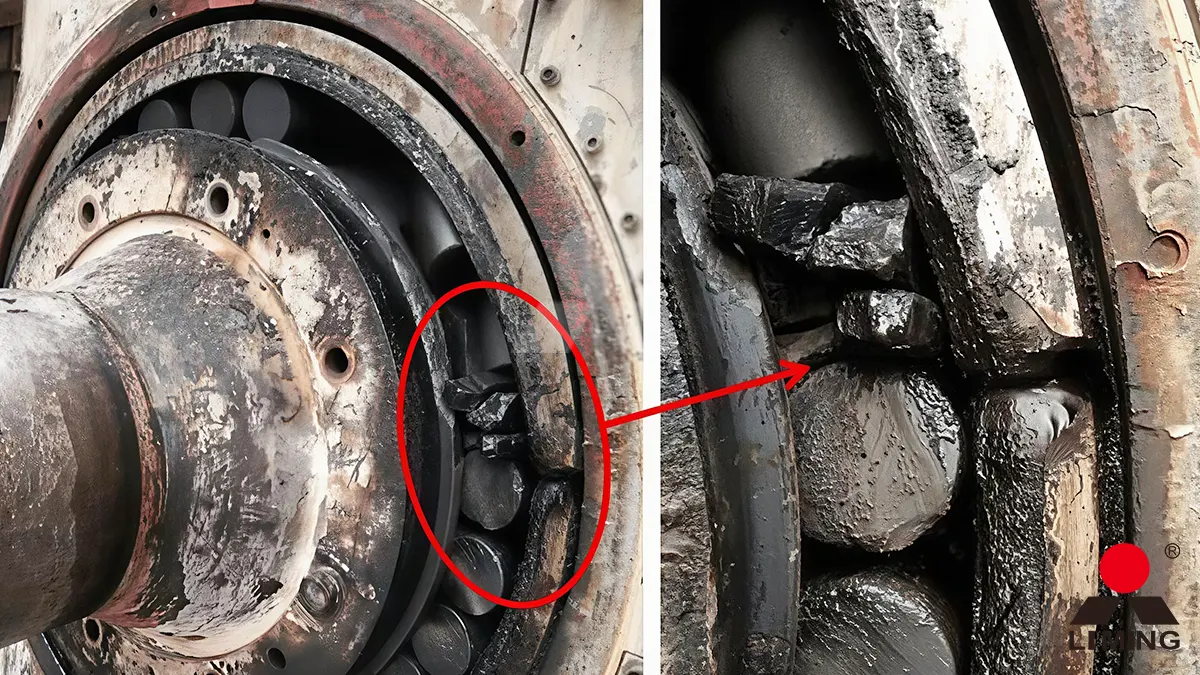
Furthermore, any tramp iron (such as frozen excavator teeth) hidden in the rock pile becomes exponentially more destructive in the winter. The hydraulic accumulators responsible for dropping the mantle and clearing the chamber must be audited daily to ensure their fluid has not thickened, guaranteeing the 60-second automated flush protocol remains active.
Synchronized Winter Maintenance Matrix
A preventative maintenance schedule must adapt to the thermodynamics of the environment.
| Maintenance Zone | Winter Protocol | Diagnostic Action | Risk of Failure |
|---|---|---|---|
| Lubrication Station | Switch to Winter-Grade Synthetic Oil | Run heaters 30 mins pre-startup | Bearing thermal seizure |
| Diesel Engine (Tracked) | Use Winterized Diesel & Block Heaters | Audit fuel filters for wax buildup | Hydraulic tramming stall |
| Conveyor Belts | De-ice rollers and check tension | Run empty to break ice bonds | Belt tearing and motor overload |
| Hydraulic Cylinders | Verify fluid viscosity & accumulator pressure | Test automated tramp iron release | Mainframe structural fracture |
The conveyor belts represent a massive vulnerability. Moisture from the crushed rock freezes overnight, bonding the rubber belt to the steel idlers. Engaging the drive motor on a frozen belt will instantly rip the rubber or burn out the motor. Operators must manually clear the ice and run the belts empty at low speeds to restore flexibility before loading aggregate.
Sub-Zero Mobile Circuit: Operational Thresholds
- Oil Temperature Baseline: Must reach >15°C before main motor ignition
- Dry-Run Protocol: 15-20 minutes empty operation to warm steel castings
- Fuel Management: Winterized diesel mandatory to prevent filter waxing
- V-Belt Tension Variance: Strictly monitored; cold rubber shrinks and snaps
- End-of-Shift Protocol: Run belts empty for 5 minutes to prevent overnight freezing
Crawler Track Mobility in Frozen Mud
Track-mounted units like the Vertex VTJ1180 rely on independent hydraulic motors to navigate the blast face. In winter, the mud and slurry generated during the day freeze solid overnight, effectively cementing the crawler tracks to the ground.
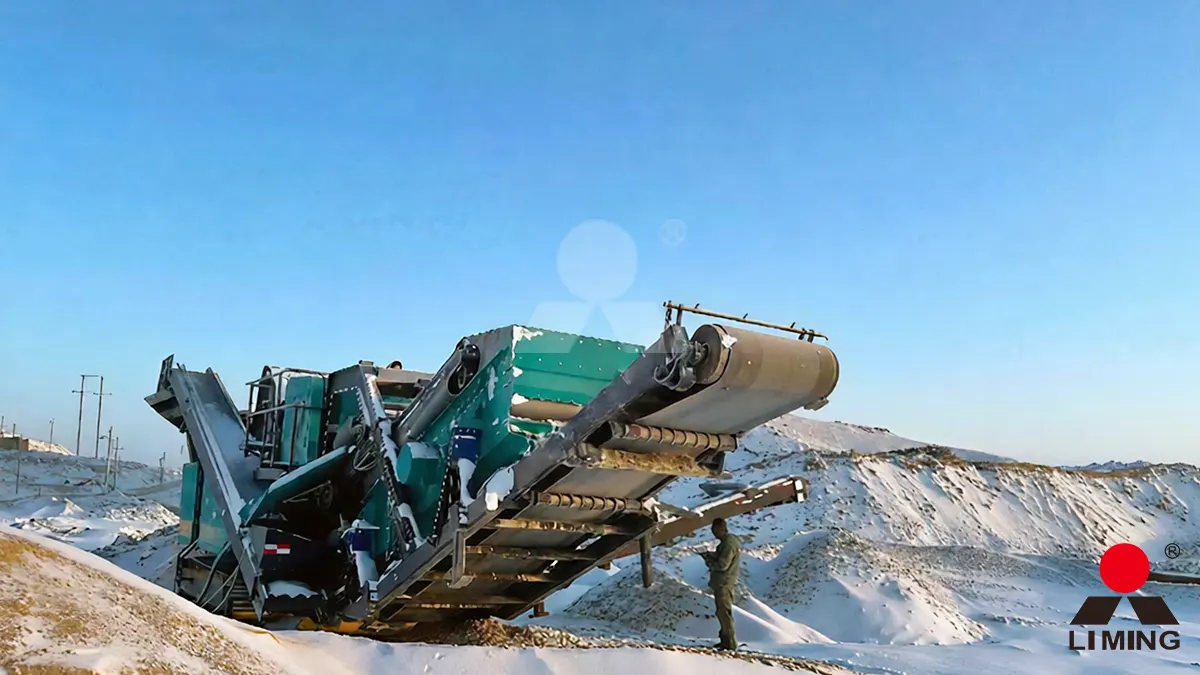
Furthermore, diesel fuel waxing is a severe issue in off-road equipment. At low temperatures, paraffin wax in standard diesel solidifies, clogging the fuel filters and starving the engine. Using winterized diesel and engaging the engine block heater ensures the power plant can generate the torque necessary to safely mobilize the chassis, protecting the overall capital payback velocity of the fleet.
Thermal Viscosity Diagnostics & Cold Brittleness Post-Mortem
What physical evidence indicates a bearing seized due to cold-weather oil starvation?
I inspected a seized eccentric shaft last winter; the copper bushing was heavily scored and showed extreme thermal discoloration (bluing), yet the oil reservoir was full. The oil was simply too thick to pump. The localized friction generated hundreds of degrees of heat in seconds because the thick sludge could not provide a hydrodynamic film.
Historically, why did contractors struggle with winter belt tearing?
Before modern end-of-shift protocols, operators would shut down the plant while the belts were still loaded with wet rock. Overnight, the material froze solid to the rubber and the steel idlers. In the morning, starting the 30 kW conveyor motor instantly ripped the frozen rubber apart. Belts must be run entirely empty before shutdown.
Why must the hydraulic clearing system be tested during the cold dry-run?
The hydraulic accumulators use pressurized nitrogen and hydraulic fluid to hold the CSS tight and release it during tramp iron events. If the fluid is too viscous, the relief valves react sluggishly. A 60-second clearing sequence might take 5 minutes, during which the uncrushable object exerts fatal pressure on the mainframe.
How does dual-power integration mitigate winter diesel failures?
Tracked units equipped with dual-power (diesel/electric) capabilities bypass diesel waxing issues entirely during the crushing phase. Once trammed into position, the operator plugs the plant directly into the grid. The 250 kW electric motor is immune to fuel freezing, drastically improving winter uptime.
Enforce Thermal Discipline to Secure Winter Uptime
Sub-zero mining operations demand absolute adherence to thermodynamic principles. Analyzing How to maintain portable crusher plant in winter? proves that treating winter maintenance the same as summer operations guarantees catastrophic mechanical fatigue. Next month, if you fail to upgrade to winter-grade synthetic lubricants or ignore the mandatory 30-minute pre-heating protocols, your expenditure per shift will hemorrhage through seized bearings and shattered manganese steel. Enforce strict thermal management, execute empty dry-runs, and secure your hardware amortization cycle against the extreme cold immediately.
