Application of Jaw Crusher in Sand Making Production Line
If engineering process design is the core of industrial production, the heavy machinery serves as its vital executioner. The process connects the entire production system, while the equipment physically transforms the raw materials. If a critical machine fails, the entire production system paralyzes. In the highly mature technology of modern aggregate and manufactured sand production lines, the selection of core equipment determines the plant’s ultimate profitability and product quality.
A standard sand production line typically consists of a vibrating feeder, primary jaw crusher, secondary cone or impact crusher, vertical shaft impactor (sand maker), vibrating screen, and sand washing machine. Among these, the primary jaw crusher plays an indispensable role. This guide analyzes the essential application and performance advantages of jaw crushers within high-efficiency sand making production lines.
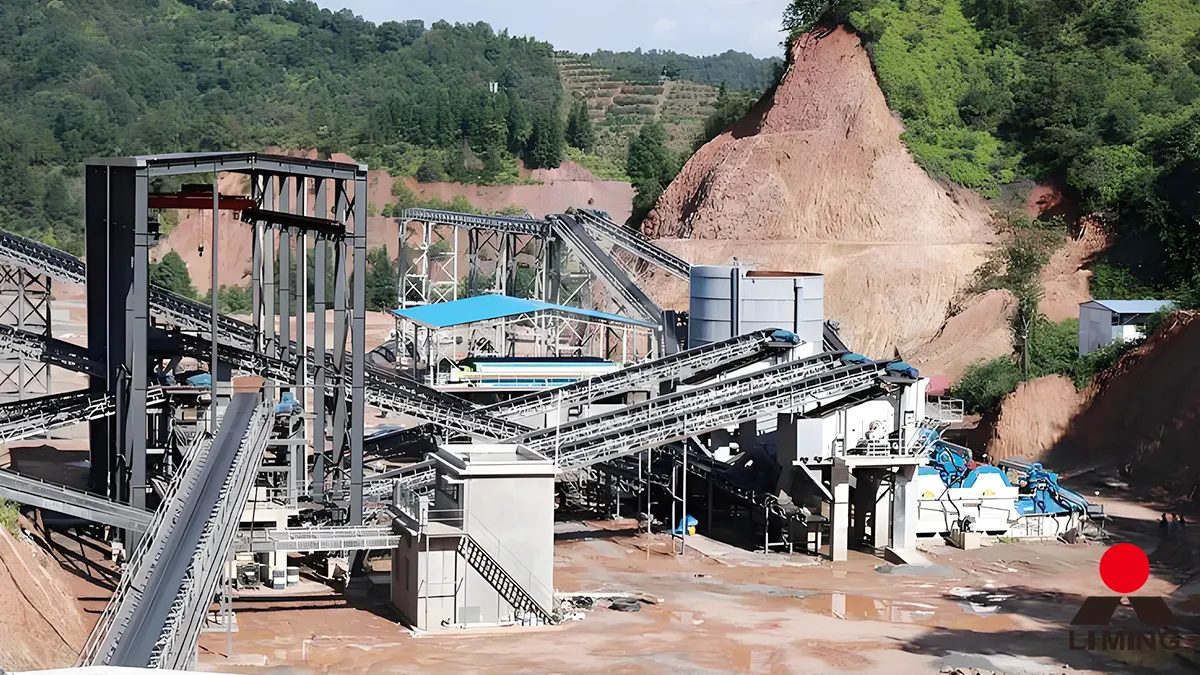
The Process Flow of a Sand Making Production Line
Modern sand making lines are engineered specifically for producing high-quality construction sand and commercial aggregates. These advanced configurations can save 50% to 60% in energy consumption compared to older, conventional setups. The production capacity generally ranges from 50 tons per hour up to large-scale 500 tons per hour facilities. The entire process follows a highly controlled mechanical sequence:
- Feeding and Primary Crushing: Raw stone is uniformly transferred by a vibrating feeder into the primary Jaw Crusher for heavy coarse crushing. This reduces massive boulders down to a manageable size.
- Secondary Crushing: The coarsely crushed rock is conveyed to a secondary machine. Depending on the rock hardness, it is processed by an Impact Crusher (for soft rock like limestone) or a Cone Crusher (for hard rock like basalt and granite).
- Tertiary Sand Making and Shaping: The material is then fed into a Vertical Shaft Impactor (VSI Sand Maker) for fine crushing and particle shaping.
- Screening and Closed-Circuit Return: The crushed material passes over a vibrating screen. Material that meets the size requirements moves forward, while oversized material is returned via a conveyor back to the sand maker for reprocessing. This creates a highly efficient “closed-loop” recycling circuit.
- Washing and Output: The perfectly sized artificial sand is sent to a sand washing machine to remove excess rock powder and impurities. Finally, the clean sand is conveyed to the finished product stockpile. If the plant utilizes a dry-processing method, it will be equipped with powder separators and high-efficiency dust collection systems instead of water washers.
Performance Advantages of Jaw Crushers in the Production Line
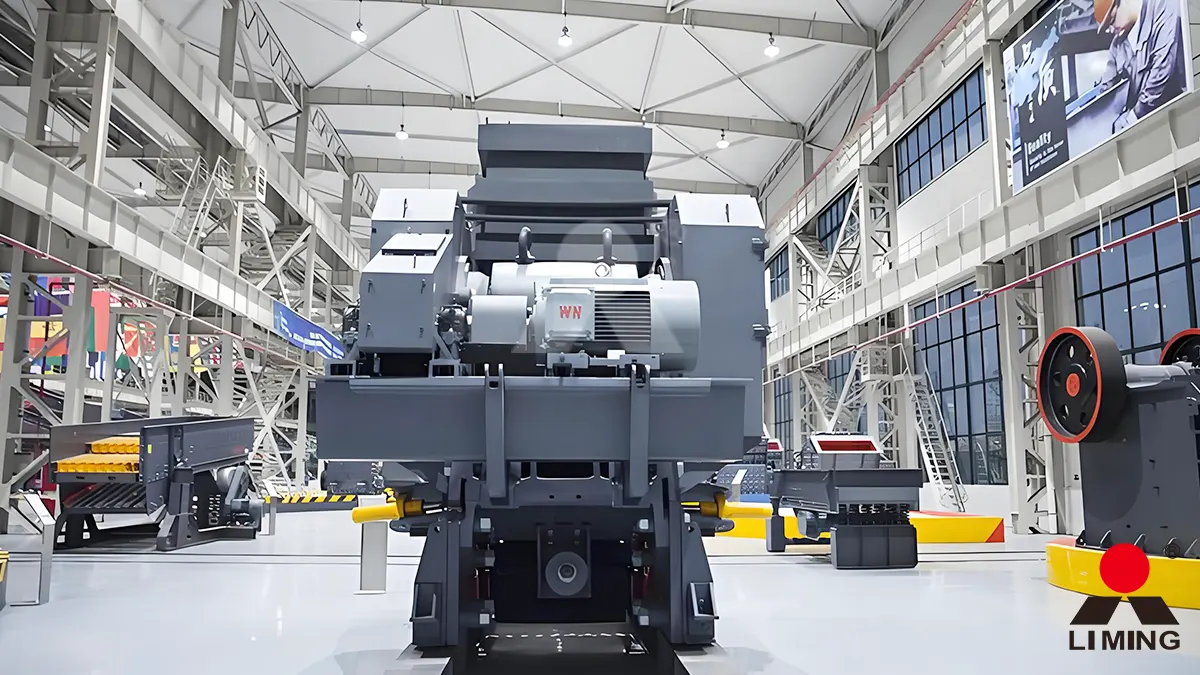
The jaw crusher is favored by investors as the primary crushing equipment because of its immense processing capacity, massive crushing ratio, and exceptionally low operating costs. The primary function occurs inside the V-shaped crushing cavity, where a moving jaw plate moves back and forth against a fixed jaw plate, applying immense compressive force to shatter the incoming rock.
As the “first pass” machine in the circuit, the performance of the jaw crusher directly dictates the efficiency of the downstream equipment. Modern models manufactured by Liming Heavy Industry, such as the PEW Series and the C6X Series Jaw Crushers, offer specific engineering advantages:
- High Crushing Ratio and Uniform Particle Size: As the material drops through the V-shaped cavity, it undergoes continuous compression from top to bottom. Because the cavity is extremely deep and contains no “dead zones,” no large rocks can slip through uncrushed. This guarantees that all material is properly reduced, maintaining a highly uniform discharge size that is perfectly prepared for the secondary cone or impact crushers.
- Low Noise and Exceptional Dust Control: Because the primary action is slow, heavy compression rather than high-speed impact, the jaw crusher generates relatively few airborne micro-fines during operation. When properly enclosed, the mechanical noise is significantly lower than that of impact equipment, allowing the plant to meet strict environmental regulations.
- High Energy Efficiency: The machine relies entirely on the kinetic energy of heavy flywheels and a simple mechanical toggle system to generate crushing force. Despite its massive output capability, modern jaw crushers feature relatively low maximum motor power requirements. A single unit can save up to 30% in electrical power consumption, making it a highly energy-efficient solution.
- Convenient Maintenance and Operation: Evaluating overall operating expenses requires looking at maintenance complexity. The jaw crusher features a straightforward mechanical design. Upgrading to models with hydraulic wedge discharge adjustments means operators can easily change output sizes without intense manual labor. Furthermore, utilizing high-strength, wear-resistant manganese alloy consumables for the jaw plates significantly extends the service life and generates substantial economic benefits for the plant owner.
- Wide Material Adaptability: The jaw crusher is successfully applied across almost all rock types, including highly abrasive basalt, granite, river pebbles, and softer limestone. The final manufactured sand produced downstream fully complies with international building material standards, serving high-speed railways, water conservancy dams, and concrete batching plants.
Future Development Trends of Jaw Crushers
As the mandatory primary crushing equipment across various industrial production lines, the jaw crusher must continuously evolve to meet modern engineering demands. The development trends focus on two main areas:
1. Enhanced Operational Stability
A jaw crusher must maintain extremely high operational stability to ensure continuous, efficient plant production. Therefore, modern mechanical design focuses on optimizing the kinematics of the eccentric shaft, utilizing non-welded bolted frame structures to prevent fatigue cracking, and upgrading bearing capacities. A simpler, more robust structural design not only guarantees stability under extreme shock loads but also drastically lowers the daily operating and maintenance costs for the user.
2. Green Environmental Protection
Industrial machinery inevitably generates dust. Future designs prioritize built-in environmental protections. Modern jaw crushers are increasingly designed with integrated dust suppression covers, heavy-duty rubber vibration dampeners, and water spray integration at the feed opening to isolate and suppress dust directly at the source, realizing a truly green manufacturing process.
The Liming Heavy Industry Commitment
The jaw crusher has solidified its position as an indispensable tool within the sand making production line. By producing massive volumes of pre-crushed aggregate, it effectively drives the efficiency of the entire plant, directly supporting local and national infrastructure development.
Whenever you choose to invest in the sand and gravel industry, Liming Heavy Industry provides qualified technology, premium machinery, and intimate after-sales support. As a highly experienced manufacturer and exporter of mining machinery, we deliver equipment that earns your trust, ensures long-term operational stability, and maximizes the profitability of your aggregate business.
