Mobile Crushing and Screening Plant of 600 TPH Capacity
Introduction
Mobile crushing and screening plants have revolutionized the mining and construction industries by offering flexible and efficient processing solutions. A 600 TPH (tonnes per hour) capacity plant represents a high-performance system capable of handling large-scale operations while maintaining mobility advantages.
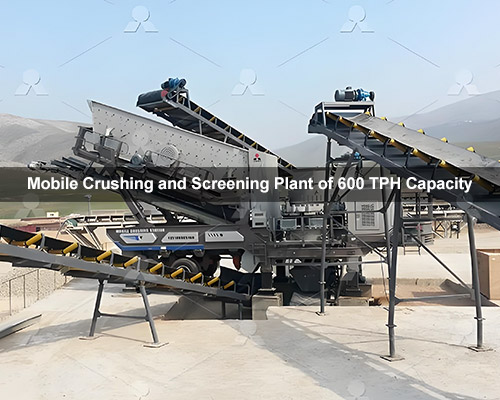
Key Components of 600 TPH Mobile Plant
- Primary Crushing Unit: Typically equipped with a high-capacity jaw crusher or gyratory crusher for initial size reduction.
- Secondary/Tertiary Crushers: Cone crushers or impact crushers for finer crushing stages.
- Vibrating Screens: Multi-deck screens for accurate material separation.
- Conveyor System: Robust belt conveyors for material transfer between components.
- Power Unit: Diesel-electric or fully electric power options available.
- Control System: Advanced automation for optimal operation.
Advantages of 600 TPH Mobile Plant
- Mobility: Quick relocation between job sites reduces transportation costs
- Fast Set-up: Operational within hours on new locations
- High Production Capacity: Suitable for large-scale projects
- Fuel Efficiency: Modern plants feature energy-saving technologies
- Space Efficiency: Compact design compared to stationary plants
- Versatility: Handles various materials from hard rock to recycled concrete
Typical Applications
- Large-scale quarry operations
- Mining projects requiring temporary processing
- Major infrastructure projects like highways or dams
- Recycling operations for construction waste
- Time-sensitive projects requiring rapid deployment
Maintenance Considerations
While mobile plants offer flexibility, their high capacity requires:
- Regular lubrication of all moving parts
- Frequent inspection of wear components
- Periodic calibration of screening decks
- Monitoring of hydraulic and electrical systems
- Proper training for operation and maintenance crews
Conclusion
The 600 TPH mobile crushing and screening plant represents the pinnacle of portable processing technology, combining large-scale production capabilities with the flexibility of mobile equipment. Its advanced design makes it ideal for projects requiring high output and frequent relocation, offering a cost-effective alternative to stationary plants.
